— By Sumayyah Uddin, NYSG's Science Writer
Contact:
Kathy Bunting-Howarth, NYSG's Associate Director, E: keb264@cornell.edu, P: 607-255-2832
Stony Brook, NY, November 29, 2025 - This past summer, undergraduate students got hands-on experience working with scientists, local communities, and government partners thanks to New York Sea Grant’s 2025 Community Engaged Internship (CEI). Here, in their own words, some of the CEI interns reflect on their experiences in the program.
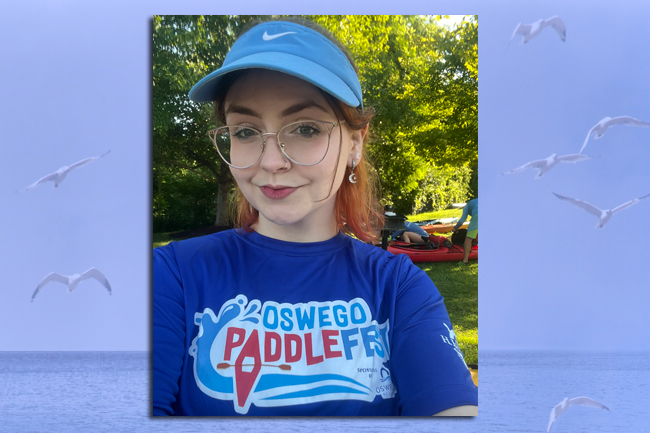
Aileigh Ray is a Fall 2025 senior at SUNY Oswego, where she is a criminal justice major and a political science minor. As a 2025 CEI Fellow, she worked at the H. Lee White Maritime Museum in Oswego, NY, creating an exhibit, helping with daily duties as a front desk worker, and assisting with local events.
In her own words:
My name is Aileigh, and this summer, I got the opportunity to be a [CEI] fellow through the New York Sea Grant.
I worked alongside community partners at the H. Lee White Maritime Museum in Oswego, NY to develop a comprehensive exhibit on recreation and tourism along the shores of Lake Ontario. This consisted of a lot of personal research and collaboration with the [museum] that helped broaden my local historical knowledge and appreciation for Lake Ontario. This exhibit consists of hobbies and activities done all around the shore and water, including personal elements of interest such as beachcombing, rock finds, and shoreline birdwatching.
Whil[e] developing this exhibit, I helped with daily duties at the museum as a front desk worker, and even got to assist with awesome local events like Paddlefest and Harborfest. On top of that, I was also given the opportunity to work as a guide at the West Pierhead Lighthouse, where I met [both] some incredible community members and tourists alike!
I’ve had a fantastic time this summer working alongside wonderful coworkers and volunteers I’ve met through the museum, and I am immensely grateful for this opportunity to expand my hometown's historical knowledge and local community ties!

Elise Ruby (picture above at left, holding a brown bullhead caught in the upper Niagara River) is a Fall 2025 sophomore at SUNY ESF, where she is working on a degree in Environmental Biology. As a summer CEI intern with NYSG, Elise worked with the Razavi Ecotoxicology Lab at SUNY ESF, collecting and analyzing fish samples in and around Buffalo, NY, and helping with educational workshops. Ruby is pictured here (at left) holding a brown bullhead caught in the upper Niagara River.
In her own words:
I began this summer with minimal research experience and a desire to continue exploring my interest in the aquatics and fisheries science field. The CEI internship with NY Sea Grant, [which] placed me in the Razavi Ecotoxicology Lab at SUNY ESF, allowed me to get more hands-on field and lab experience and participate in field sampling events that I had never done before.
The project I worked on this summer is a contaminants project comparing what communities around Buffalo are consuming through wild-caught and store-bought fish and the benefits and risks of consuming those fish. I got to participate in both conducting electrofishing sampling with the Invasive Species Crew from the United States Fish and Wildlife Service on the Niagara River and selecting and in purchasing the store-bought fish samples from various locations around Buffalo, which allowed me to immerse myself in conversation with community members consuming those fish. In the lab, I spent long but rewarding days processing, filleting, and homogenizing fish samples that had to be prepared for PFAS, Mercury, Fatty Acid, and Elemental analyses.
I also got the opportunity to help plan and facilitate a workshop alongside my mentor Stacy Furgal, Katie Fiorella from Cornell University, Taylor Rijos from Cornell University, and Jeanne Coffin-Schmitt from Cornell University. This workshop was targeted towards aligning fishing regulations with consumption advisories to ensure that fishing regulations and consumption advisories are being properly communicated to all anglers so that they can safely consume the fish they catch. It was a great experience for me because it brought [together] individuals from all over the state who were employees or affiliated with government and community organizations. The topics and discussions I was a part of really opened my mind as to how policy works on the government side and how it is being received and interpreted by community members.
Overall, my experience as a CEI intern was extremely positive and beneficial. I will be continuing on at the Razavi Ecotoxicology Lab during the academic year to continue working on a podcast with my on-site mentor Roxanne Razavi Ph.D. and to conduct research. I feel as though this internship solidified my desire to pursue a career in aquatics and fisheries science and helped me get my foot in the door when it came to getting involved with research as an undergraduate student.
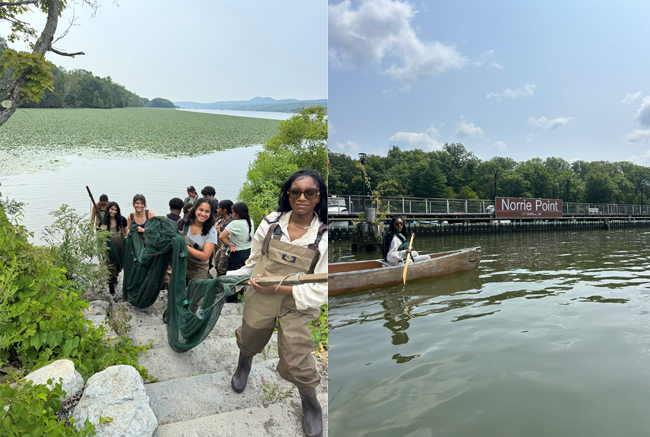
Genesis Dacosta (pictured above at Norrie Point seining and paddling on the Hudson River) is a Fall 2025 junior at John Jay College, where she is pursuing a major in political science. As a summer CEI fellow with New York Sea Grant, Genesis Dacosta created online resources to help New Yorkers cut plastic pollution, especially from clothing. Alongside Gen Space NYC and Hudson River Park, she co-facilitated workshops showing interns microplastics and exploring solutions.
In her own words:
My time as a CEI intern with New York Sea Grant has been one of the most rewarding experiences I’ve had. I came in excited to learn more about the connection between fashion and microplastics, and I left with a deeper understanding of how science, design, and community can come together to make real change.
One of my biggest projects was creating the draft for TrashFreeNYC, a website that brings together resources for New Yorkers to recycle, compost, join cleanups, and take civic action. I wanted the site to feel simple and easy to use so people in all five boroughs could find what they need — whether compost drop-off locations, textile waste recycling, or volunteer events. Building [the site] taught me how to combine research and design to make a tool that serves communities.
I also facilitated hands-on microplastic workshops at Genspace and Hudson River Park. We showed interns how to identify microplastics under blue light, look for microfibers on clothing, and even find microplastics in shrimp samples. Hearing the interns explain in their own words why microplastics matter made me realize how important youth engagement is. Early education really can spark curiosity and inspire future climate leaders.
Another highlight was visiting a wastewater treatment facility in Brooklyn. It gave me a behind-the-scenes look at how our city deals with waste and how small changes like laundry filters can prevent microplastics from entering waterways.
This internship helped me grow in ways I didn’t expect. I learned how to translate complex science into clear, useful information, and how to bridge the gap between scientists and the community. More than anything, it showed me that environmental work isn’t just about data; it's about people, access, and making sure everyone has a chance to be part of the solution.
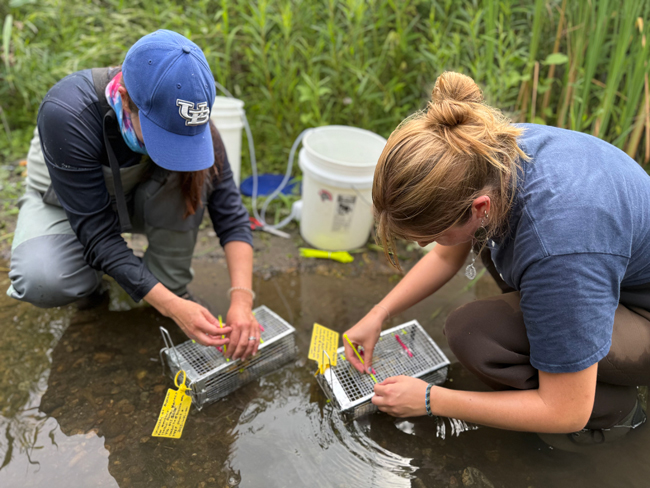
Isabel Hahl (pictured above at right studying freshwater mussels on Blasdell Creek in Erie County, NY) is a Fall 2025 junior at Colgate University. As a summer Sea Grant CEI, Izzie worked alongside University of Buffalo and NYSG to investigate native freshwater mussel habitat feasibility. She also worked with her mentor, NYSG Great Lakes Literacy Specialist Nate Drag, to create educational resources that teachers and nonformal educators can use to bring these unique species to life with their learners. One of these resources was an educational field guide that can be used to identify different freshwater mussels shells as part of lesson plan. Izzie also assisted in the facilitation of a professional development workshop for teachers in August, including lesson demonstrations and a stream survey.
In her own words:
Hey! My name is Izzie and I am a Sea Grant CEI. This summer, I was fortunate enough to work with NYSG and University of Buffalo on native freshwater mussels. Over the summer, I have come to love the freshwater mussels around Lake Erie because of their underrated uniqueness. Freshwater mussels used to be plentiful in the area, so I have been assisting Isabel Porto-Hannes and Corey Krabbenhoft on research projects to understand the feasibility of restoring these important creatures.
On the community intern side, I have been aiding Nate Drag in forming and carrying out a freshwater mussel lesson plan for local educators!
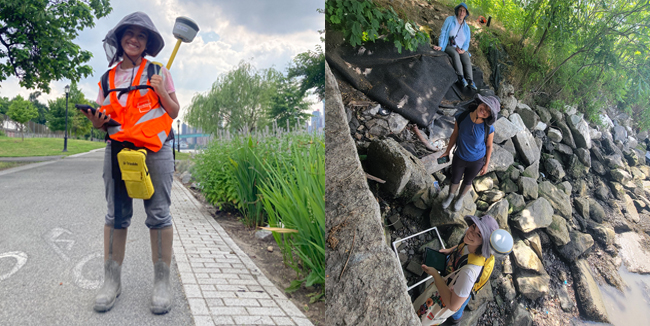
Janice Yohannan is a Fall 2025 junior at Cornell University studying environment and earth science with a focus on land and water resources. As a CEI intern focusing on wetland field data collection, Janice worked with the Long Island Sound Partnership, the Urban Waterers Federal Partnership, and other groups to monitor natural and nature-based shorelines.
In her own words:
I started off my summer mostly with background research into the shoreline monitoring framework that I would be carrying out and helping out [my mentor] Lillit Genovesi (an Outreach Coordinator with the Long Island Sound Partnership, NYC) with some outreach events.
One highlight was volunteering during the Long Island Sound Partnership’s new Comprehensive Conservation and Management Plan (CCMP) signing, especially because it allowed me to expand my network and have some great conversations with professionals in the field that really care about their work. I was also able to help lead a Sound Stewards event and got to practice some of my science communication skills, learning about the needs of NYC educators and students to promote environmental stewardship in schools.
The bulk of my summer involved field work in shoreline areas of NYC. My days were filled with sneaking through fenced areas, scaling boulders along the water, swatting away zebra mosquitos, and debating plant species with my team — and then catching a train back home with all my smelly equipment. Each day and site were a unique adventure and taught me a lot about the flexible, unpredictable nature of field work. I'm also really grateful to have collaborated with so many organizations and learned from such an experientially diverse range of people during my time on the natural and nature-based features (NNBF) project.
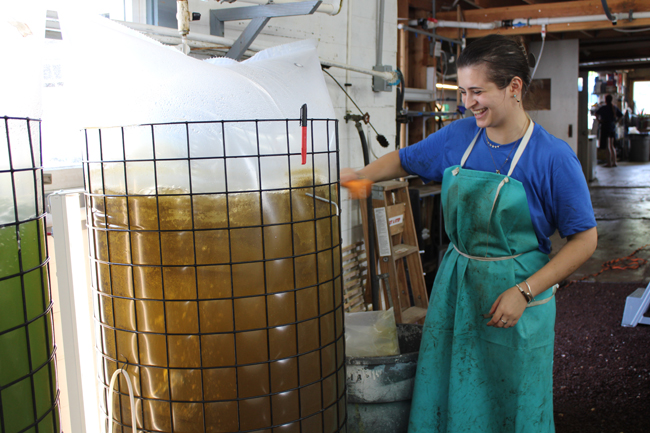
Miradyn Feist is a Fall 2025 junior at Cornell University, where she is working on a double major in both environment & sustainability and government. Miradyn spent her summer working at an oyster hatchery and with the Long Island Oyster Growers Association, where she got a firsthand look at the workforce development and daily challenges that go into running a sustainable aquaculture business.
In her own words:
As a future marine policymaker, this summer has been incredibly impactful in building my understanding for how policy, science, and local engagement can come together to build a climate-resilient future.
I worked three days a week at Hart’s Hatchery in Sayville, NY, gaining firsthand experience in the delicate and intense process of raising oyster seed. I observed directly how human-caused issues like poor water quality and ocean acidification are already disrupting marine industries and threatening our coastal ecosystems. I’ve long believed that effective legislation needs to have a foundation in the realities of local communities, and the lessons I’ve learned from my mentors Lizzie Savage and Billy Hart are sure to guide my future efforts.
In addition to working at the hatchery, I worked with the Long Island Oyster Grower’s Association (LIOGA) to expand the information available on their website, making it much easier for consumers to connect with local growers, learn where their oysters come from, and engage with the environmental benefits of oyster aquaculture. As the shellfish industry continues to grow on Long Island, so do its environmental impacts. Among many other things I learned this summer, discovering how oysters vastly improve our water quality by their ability to filter up to 50 gallons a day at maturity and strengthening coastal ecosystems by forming natural reefs was mind-blowing. This knowledge truly underscored the need to create supportive policy that enables growers to continue to farm our waters in the future.
Working at the intersection of industry participation, education, and local engagement, I’ve learned this summer just how powerful sustainable aquaculture can become. This experience has not only deepened my appreciation for oysters as an economic and ecological asset, but has solidified my commitment to pursuing a legal career dedicated to supporting marine industries and the habitats they sustain.

Veda Keon is a Fall 2025 junior at SUNY College of Environmental Science and Forestry (ESF), where she is studying Conservation Biology with minors in marine science and environmental writing and rhetoric. As a CEI fellow, she spent the summer conducting research on microplastic pollution in the Hudson River at Norrie Point Environmental Center while assisting with summer education programs with the NYS Department of Environmental Conservation (NYSDEC), including the 2025 Institute Discovering Environmental Scientists (TIDES) program.
In her own words:
This summer, I focused on assessing microplastic concentrations in the water column of the Hudson in both the freshwater and brackish areas. While overall microplastic concentrations are starting to be known, this question is still something people are wondering: [whether] the concentrations are evenly distributed vertically through the column. This has been discussed by a few people here at the Department of Environmental Conservation (DEC) and Norrie Point, so it was very cool to test it and know that its research can be expanded by the more permanent staff. This was my first time performing research that can be used for further study, making it feel more important than the school projects I've previously done.
I also expanded my outreach and science communication skills by helping with the summer education programs and creating two outreach documents. The first outreach document, which I made in collaboration with another intern, was an updated factsheet detailing TEAM SCRAP, a community science program for sampling and analyzing microplastics on the Hudson River that has been active for 5 years. The other outreach document compared microplastics to different numbers of larval fish species in the Hudson River. This was done to present microplastics in a more tangible way and compare them in a way the public can more easily digest, as opposed to the often very scientific [measurement] ppm (parts per million).
Overall, this experience has been extremely positive. I feel I've done valuable work and have made connections that can help me in my future career that would definitely have been harder to get otherwise.
More Info: New York Sea Grant
Established in 1966, the National Oceanic and Atmospheric Administration (NOAA)’s National Sea Grant College Program promotes the informed stewardship of coastal resources in 34 joint federal/state university-based programs in every U.S. coastal state (marine and Great Lakes) and Puerto Rico. The Sea Grant model has also inspired similar projects in the Pacific region, Korea and Indonesia.
Since 1971, New York Sea Grant (NYSG) has represented a statewide network of integrated research, education and extension services promoting coastal community economic vitality, environmental sustainability and citizen awareness and understanding about the State’s marine and Great Lakes resources.
NYSG historically leverages on average a 3 to 6-fold return on each invested federal dollar, annually. We benefit from this, as these resources are invested in Sea Grant staff and their work in communities right here in New York.
Through NYSG’s efforts, the combined talents of university scientists and extension specialists help develop and transfer science-based information to many coastal user groups—businesses and industries, federal, state and local government decision-makers and agency managers, educators, the media and the interested public.
New York Sea Grant, one of the largest of the state Sea Grant programs, is a cooperative program of the State University of New York (SUNY) and Cornell University. The program maintains Great Lakes offices at Cornell University, SUNY Buffalo, Rochester Institute of Technology, SUNY Oswego, the Wayne County Cooperative Extension office in Newark, and in Watertown. In the State's marine waters, NYSG has offices at Stony Brook University and with Cornell Cooperative Extension of Nassau County on Long Island, in Queens, at Brooklyn College, with Cornell Cooperative Extension in NYC, in Bronx, with Cornell Cooperative Extension of Ulster County in Kingston, and with Cornell Cooperative Extension of Westchester County in Elmsford.
For updates on Sea Grant activities: www.nyseagrant.org, follow us on social media (Facebook, Twitter/X, Instagram, Bluesky, LinkedIn, and YouTube). NYSG offers a free e-list sign up via www.nyseagrant.org/nycoastlines for its flagship publication, NY Coastlines/Currents, which it publishes 2-3 times a year.